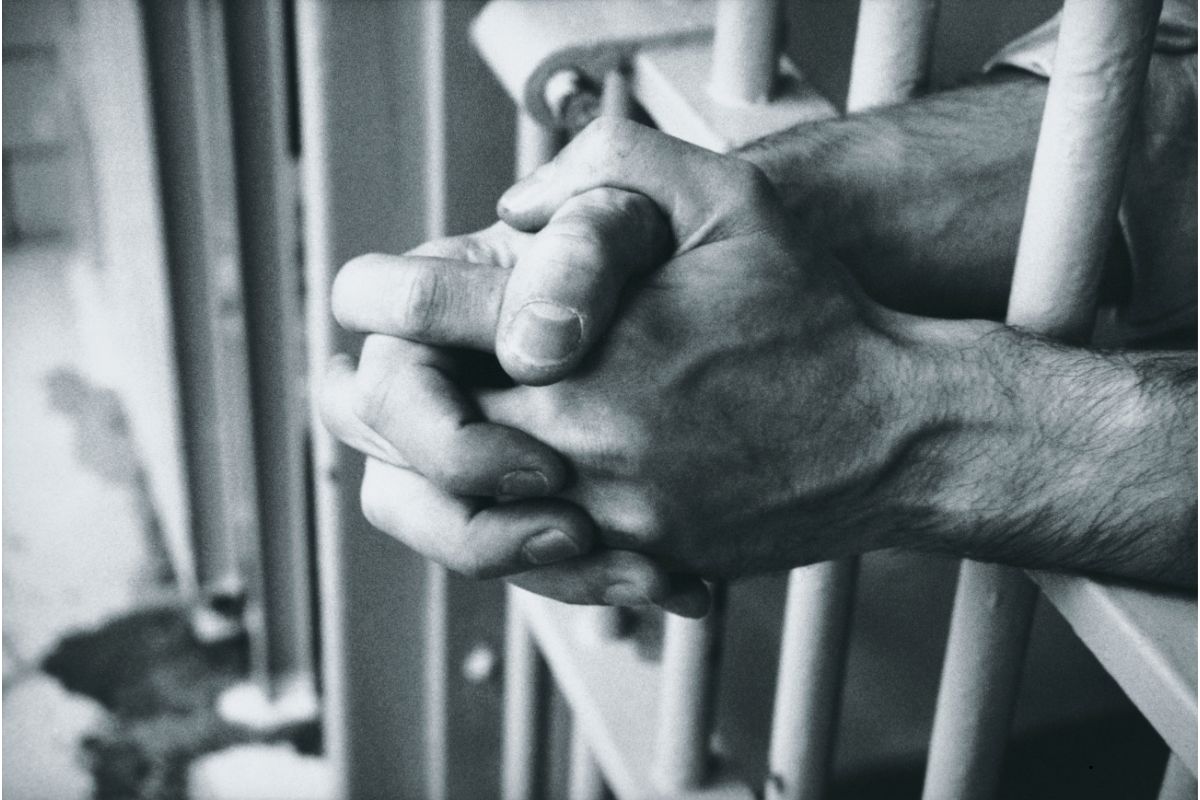
There is a particular kind of tragedy that cuts deeper than most: the kind that never had to happen in the first place.
Every homicide is devastating, but some carry an added, unbearable weight—the knowledge that the perpetrator had already demonstrated a clear capacity for violence and was nonetheless free to act again. These are not unforeseeable acts of chaos. They are, in many cases, the consequence of decisions made within our criminal justice system—decisions that favored leniency, discretion, or ideological commitments over public safety.
Consider the 2021 killing of Michelle Go in New York City. Pushed in front of a subway train by Simon Martial, Go’s death shocked the nation. Martial had a documented history of severe mental illness and prior arrests. He had been released shortly before the attack despite clear indicators that he posed a danger. The system did not lack information; it lacked the will—or perhaps the framework—to act decisively on it.
Or take the case of Lee Michels, a retired Wisconsin judge murdered in 2022 by Douglas Uhde. Uhde had prior run-ins with the law and a history of concerning behavior. While not every past offense predicts future violence, patterns matter. The failure to intervene meaningfully before escalation proved fatal.
In Los Angeles, the murder of Jacqueline Avant during a home invasion brought renewed scrutiny to California’s criminal justice policies. The suspect, Aariel Maynor, was on parole at the time of the crime, having previously been released early. Again, a system designed to weigh rehabilitation and second chances had to confront the consequences of miscalculation.
These cases differ in detail but share a structural similarity: a known offender, a record of prior behavior, and a decision point where authorities chose not to incapacitate or more closely monitor the individual. The result, in each instance, was irreversible: the cruel and abominable death of an innocent person.
To be clear, the principle of leniency is not inherently misguided. A justice system that never forgives, never recalibrates, and never allows for rehabilitation would be both morally and practically flawed. But leniency without rigorous risk assessment is not compassion—it is negligence and it is foolishness.
Over the past decade, a number of jurisdictions have embraced reforms aimed at reducing incarceration rates, eliminating cash bail, and rethinking prosecution strategies. These efforts are often framed as necessary correctives to over-incarceration and systemic inequities. There are some instances where that framing has some merit. The United States has long grappled with balancing punishment and fairness.
However, the pendulum in certain areas appears to have swung too far toward abstraction—toward theories of justice that insufficiently account for individual threat profiles. When prosecutors decline to pursue charges for repeat offenders, or when judges release individuals with extensive violent histories under the assumption that they are not an immediate danger, the system ceases to function as a safeguard.
The public is not demanding perfection. It is demanding prudence.
Risk assessment is not guesswork; it is a discipline informed by data, behavioral history, and patterns of escalation. A perpetrator with a long record of violent or erratic conduct is not equivalent to a first-time offender. Treating them as such in the name of equity, uniform policy, or ideological consistency is a category error—one with potentially deadly consequences.
What is needed is not a wholesale rejection of reform, but a recalibration. Prosecutorial discretion must be exercised with a clear-eyed understanding of risk. Judicial decisions must weigh not only the rights of the accused but, and especially, the safety of the community. Mental health interventions must be robust enough to prevent release into conditions where individuals are likely to harm others or themselves.
Accountability, too, must be part of the equation. When preventable tragedies occur, the institutional decisions leading up to them should be subject to scrutiny—not to assign blame reflexively, but to ensure that lessons are learned and policies adjusted.
The phrase “the system failed” is often invoked after such incidents. But systems do not fail on their own. They reflect the priorities, assumptions, and judgments (or lack thereof) of the people who operate them.
A just society is not one that chooses between compassion and safety. It is one that insists on both—and recognizes that failing to protect innocent lives is neither compassionate nor just. Iryna Zarutska, the 23-year-old Ukrainian women, did not deserve to lose her life on August 22, 2025 in Charlotte, North Carolina when 34-year-old Decarlos Brown, Jr., who was sitting behind her on a light rail train, pulled out a knife and stabbed her in the neck, causing her to bleed to death right there in her seat. The attack was totally unprovoked. Iryna didn’t have a chance. The same is true with 24-year-old Brianna Kupfer, a UCLA graduate school student who was working alone at her job at Croft House, a high-end furniture shop in the Los Angeles area. On January 13, 2022 Mr. Shawn Laval Smith walked into that store and stabbed Brianna repeatedly for absolutely no reason whatsoever. Brianna was butchered to death. Shawn Laval Smith had a long criminal history. But someone in the Justice System felt, incorrectly, that society was better served with Mr. Smith being free, and that decision took the life of a beautiful, promising, innocent young lady. Was anyone in the Justice System whose decisions made this brutal butchery possible held accountable in any way?
The victims in these cases are not abstractions. They are individuals whose lives were cut short not only by the actions of their attackers, but by a chain of decisions that underestimated risk and overestimated restraint.
We can—and must—do better!
And that, my friends, is the latest elephant in the room.





Get cutting-edge tips, resources, and perspectives: