
I am fascinated by the very notion of language. I am mesmerized by the fact that there are roughly 7,159 living languages in use – 44% of which are considered endangered and will very likely become extinct. I am also fascinated by the question of when does a dialect break off and become a language? It’s also of interest to note that English is spoken by more people than any other language in existence, with just under 1.5 billion English speakers. Mandarin Chinese is not too far behind with just over 1.1 billion. Then comes Hindi, which has about 611 million speakers, and is mostly spoken in India even though India does not have an official national language, but Hindi is consider the official language of the Union government. Spanish is next with 561 million speakers followed by modern standard Arabic with 335 million speakers. MSA is the formal standardized form used throughout much of the Arabic-speaking world, but it isn’t what Arab children grow up speaking around the dinner table. Instead, such children grow up speaking regional varieties of Arabic, such as Moroccan Arabic, Iraqi Arabic, Gulf Arabic, Egyptian Arabic, etc. Following Arabic, the French language has almost the same number of speakers, about 334 million.
I consider language to be a gift from God. That is why I avoid uttering vulgarity or profanity. I consider “swear words” to be off-putting, although I suspect if a sizable asteroid were to crash into the earth, I might let loose. Shame on me.
I recently discovered something rather odd about the English language: apparently, the words have been changing the rules behind our backs.
Earlier this year I read Dante‘s Divine Comedy. Before reading it, I had always associated the word “comedy” with one thing: humor. Jerry Seinfeld is comedy. The Three Stooges are comedy. Peter Sellers playing Inspector Clouseau in the Pink Panther movies is most definitely comedy.
Dante’s journey through Hell? Not so much.
Yet I learned that when Dante called his masterpiece a Commedia, he wasn’t promising laughs. In the medieval understanding associated with the work, a comedy could describe a story that begins badly but ends well—the opposite trajectory of a tragedy. Dante begins lost in a dark wood, proceeds through Hell, climbs the mountain of Purgatory, and ultimately arrives in Paradise.
That’s quite a comedy. Just don’t expect a rimshot.
Interestingly, the story of the word is even more complicated than that. The ancient Greeks certainly did have comedies intended to make people laugh. Aristophanes (whose comedies I also read earlier this year) was writing outrageous comic plays more than 1,500 years before Dante. So the meaning of comedy didn’t simply march neatly from Meaning A to Meaning B. Like language itself, it meandered.
And that got me thinking: words have biographies.
Consider “awful.” Today, if I tell you your meatloaf is awful, you probably won’t invite me back. But awful once meant something much closer to full of awe—something inspiring profound wonder or even reverential fear.
Then there’s “nice.” Today everybody wants to be nice. But trace the word backward and you eventually reach the Latin nescius: ignorant or unknowing. During its long career, nice has meant foolish, silly, timid, fussy, precise, agreeable—and eventually kind or pleasant.
Or take “silly.” Centuries ago, its ancestors carried meanings such as happy, fortunate, blessed, and innocent. Somehow the poor word went downhill and ended up meaning foolish.
Even meat once had a broader job description. In Old English it could refer to food generally, rather than specifically animal flesh. The meaning gradually narrowed until meat became what we ordinarily mean by it today.
This phenomenon even has a name: semantic change. Words broaden, narrow, improve, deteriorate, acquire figurative meanings, shed old ones, and occasionally end up meaning almost the opposite of what their ancestors meant.
Which raises an interesting question.
When we read something written 100, 500, or 2,000 years ago, are we actually reading what the author meant—or merely what those same words mean to us?
That’s not an insignificant distinction.
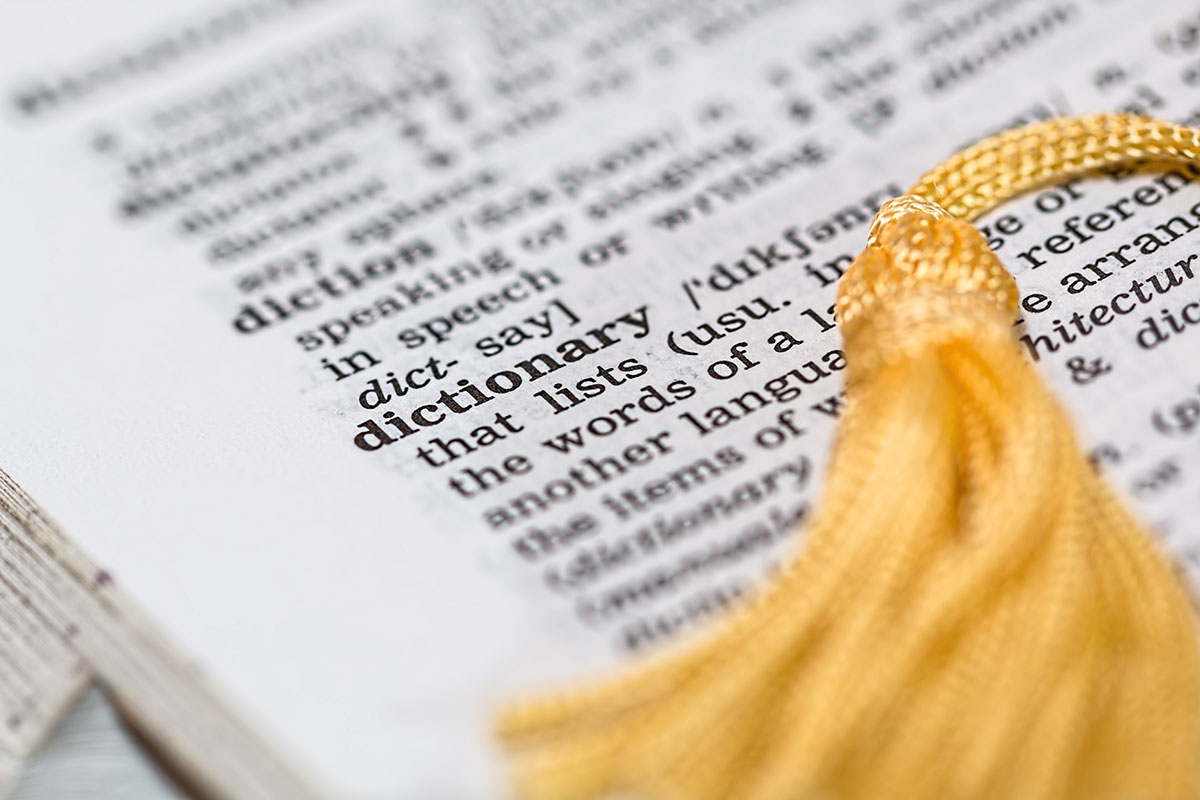
We sometimes treat dictionaries as though they were tablets brought down from Mount Sinai: Here is what this word means. But dictionaries are really snapshots. They tell us how a linguistic community is using a word at a particular point in history. They are descriptive, not prescriptive.
Language isn’t carved in granite. It’s alive.
Every generation inherits a vocabulary, tinkers with it, abuses it, improves it, shortens it, stretches it, invents slang, converts nouns into verbs, and occasionally drives English teachers completely bonkers like I used to do when I was in high school.
And then it hands the whole magnificent mess to the next generation.
Perhaps that’s why old books can surprise us so much. We think we’re visiting another age armed with familiar words.
Then we discover the words got there before us—and they’ve been living entirely different lives.


Get cutting-edge tips, resources, and perspectives: