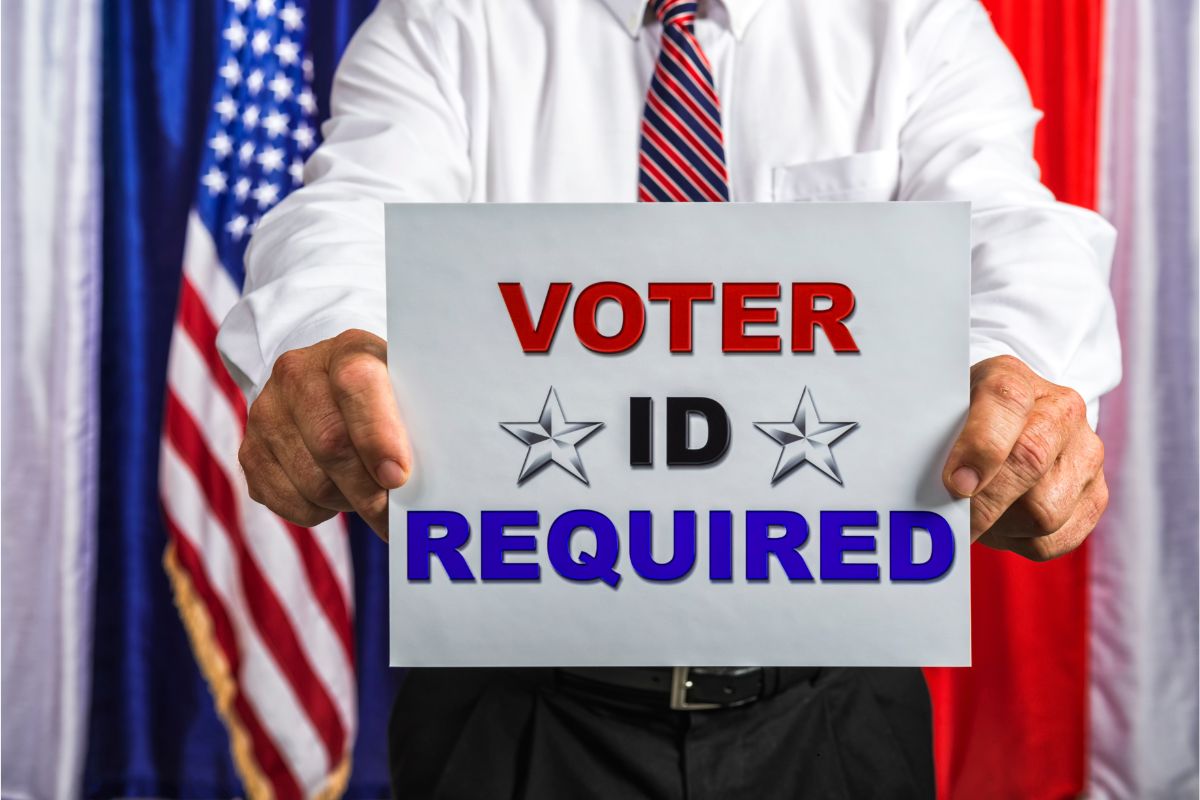
Let’s talk about something that has quietly become one of the most heated—and misunderstood—debates in our country: voter ID laws.
On one side, many Republican lawmakers argue that requiring identification to vote is simply common sense. After all, we show ID to board a plane, drive a car, pick up prescriptions, or even buy certain everyday items. Why, they ask, should voting—arguably one of the most important civic duties we have—be held to a lower standard?
On the other side, many Democrats oppose stricter voter ID requirements, arguing that such laws can disproportionately impact certain communities, particularly minority and low-income voters, who may face greater hurdles in obtaining acceptable forms of identification.
At face value, both arguments deserve consideration. Election integrity matters. So does equal access to the ballot.
But here’s the elephant in the room: what assumptions are we making when we say that requiring ID is inherently discriminatory?
The implication—intentional or not—is that there are large groups of Americans who are less capable of obtaining or presenting identification. That’s a serious claim. And it’s worth examining carefully.
Millions of Americans across all backgrounds navigate systems that require identification every single day. They work, travel, bank, and participate in modern life in ways that routinely require proof of identity. To suggest that entire communities are broadly unable to meet that same standard when it comes to voting raises uncomfortable questions—not just about policy, but about perception. Do Democrats really believe that the typical black American is somehow incapable of obtaining ID? Are Democrats serious with the implication that black Americans have a defect that Asians, Hispanics, and Whites do not have when it comes to securing ID? Could these stated claims (which strike many as racist) be, instead, a smoke screen for allowing for election fraud — not necessarily by black Americans, but by illegal aliens? These are legitimate questions.
At the same time, wouldn’t it be equally shortsighted to ignore that barriers sometimes do exist? Not everyone has equal access to transportation, documentation, or flexible time to deal with bureaucratic processes. Those are also real challenges, and they shouldn’t be dismissed.
So perhaps the issue isn’t whether voter ID laws should exist—of course they should—but how they are implemented.
Can we require identification while also making it easier and more accessible for every eligible citizen to obtain one?
Can we expand access to free IDs, streamline the process, and ensure that no one is unintentionally excluded?
That’s where the conversation becomes productive.
Because confidence in our elections is not a partisan luxury—it’s a national necessity. If a significant portion of the population doubts the integrity of the system, that alone is a problem worth addressing. At the same time, if people feel the system is stacked against them, that too undermines trust.
Is it really necessary that we have to choose between security and access? I don’t think so. A well-designed system should deliver both.
The real question isn’t whether Americans are capable of meeting a reasonable standard. It’s whether our leaders are capable of building a system that is both secure and fair.
That’s the conversation we should be having.
And that, my friends, is the latest elephant in the room.



Get cutting-edge tips, resources, and perspectives: