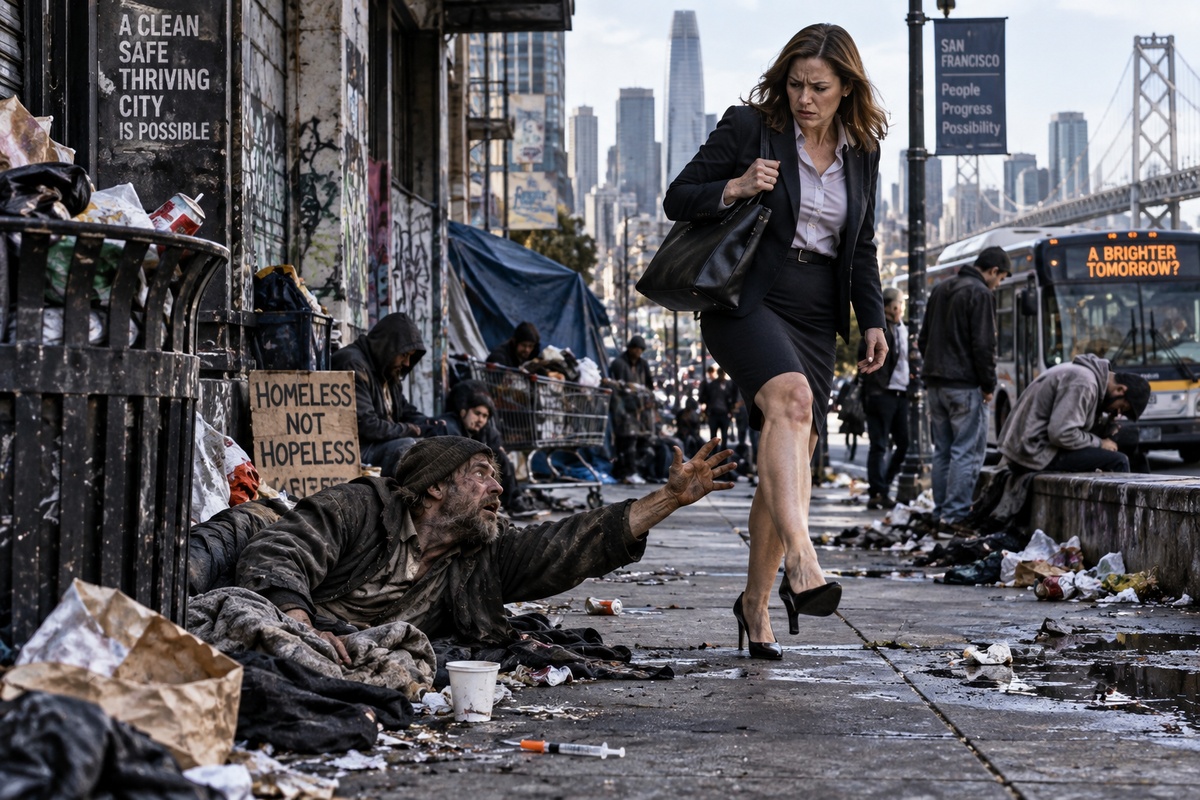
For most people, the story of the medieval world was one of cramped cities, constant violent crime, and episodic outbreaks of deadly plagues—the dividends of unclean urban conditions, rotting food, fouled water, open sewage, and unchecked rats, fleas, and lice. Most of each day was spent simply trying to survive until the next.
Castles and walls dotted the landscape to protect kingdoms from marauding tribes and foreign invaders. City gates were usually closed at dusk to keep out nocturnal marauders. Public executions drew massive crowds. And religious schisms and conflicts often turned deadly.
In other words, it was not altogether unfamiliar to the world we are becoming today.
Yet meanwhile, science advanced quietly among true elites at universities, courts, and monasteries, producing windmills, mechanical clocks, and eyeglasses. Sophisticated crossbows were manufactured in great numbers. Large, multi-sail warships were built that could cross narrow seas.
Some of history’s greatest literature—Dante’s Divine Comedy, Chaucer’s Canterbury Tales, and St. Thomas Aquinas’s Summa Theologiae—was the product of the medieval mind.
We still gaze dumbfounded at the architectural genius and beauty of the colossal cathedrals of Cologne, Florence, Milan, Paris, Rome, and Seville. The Byzantine cathedral Hagia Sophia may have risen near the beginning of the medieval period and for a millennium, nothing rivaled its majesty. All these medieval architectural masterpieces were built without computers, porta-potties, overtime, or building permits.
Yet after the collapse of the classical world (circa A.D. 500), Western civilization still needed a millennium to recover even a modicum of its lost knowledge and technology. Centuries passed before the Renaissance saw hygienic principles of sewage systems, aqueducts, and waste disposal—not to mention the medical expertise of classically trained doctors and scientists.
Modern Medievalism
Yet our progressive-regressive modern West is now suddenly beginning to resemble the medieval age—with one important caveat: after centuries of so-called “progress,” we should know better.
Our mounting urban filth, dangerous streets, and resurgent diseases are juxtaposed with brilliant revolutions in artificial intelligence, bioengineering, robotics, satellite technology, spaceflight, and cancer research.
Unlike their counterparts in the medieval fiefdom, our officials know how to stop disease, crime, and filth but apparently choose not to. Their neglect grows out of a sick ideology that divides the world into the blameworthy “oppressors” and the blameless “oppressed.” The victim is always right and must be championed—at least from a distance or as long as he does not show up smelly on your doorstep.
We have just experienced a tribal invasion of millions of impoverished foreigners swarming across our southern border—until the belated resumption of border-wall construction, medieval-style, and the deployment of detested patrols who try bravely to stop them.
Western urban street crime seems to require the army to restore calm yet often grows unchecked when troops are barred from helping police.
It is technically illegal for people to camp out on public sidewalks or someone else’s property—unless they do so in such numbers that paralyzed city officials look the other way.
Defecation, urination, fornication, and drug injection are now routine spectacles for hurried sidewalk passersby. If Los Angeles or Berkeley allows its streets and sidewalks to become medieval, should we be surprised by outbreaks there of deadly medieval diseases like typhus and leptospirosis—or that our storm drains now double as sewage gutters?
Today’s mayors will not stop rats from breeding, while officials—most recently in Los Angeles, for example—consider proposals for taxpayer-funded “hygienic sexual-relief clinics” offering homeless people “private sexual relief through masturbation.”
In New York, some of the richest people in the world sidestep rancid piles of rat-infested trash. In San Francisco and Chicago, some of the world’s greatest cancer researchers check their shoe soles for human feces before entering their space-age labs.
Weirder still, the Western world has become both the most regulated and the most lawless civilization on the planet. Our state environmental detectives visit industries to ensure that their effluvia do not contain one part per billion of a particular toxic substance. And state and federal regulators, with dozens of letters after their names, examine daily microscopic traces of dangerous toxins in the bubbling pools of sewage at treatment plants.
Yet under cover of darkness, masked city workers decked out in hazmat suits, rubber boots, and gloves use high-pressure hoses to blast politically correct feces, urine, blood, and drug detritus into storm drains. These modern marvels carry the mess out to pollute supposedly pristine ocean waters—where a fisherman can be fined a small fortune for tossing an inert, empty soda can into the smelly water. In the modern West, one-billionth of Roundup is a threat to civilization; tons of feces on city sidewalks are not. The theory? The more the law-abiding are monitored to the nth degree, the more society can withstand exempting the lawless to do as they wish.
How strange is our postmodern medieval intersection between barbarity and civilization?
And that, my friends, is the latest elephant in the room.





Get cutting-edge tips, resources, and perspectives: